
Seasonal Depression in the Treasure Valley: Why Winter Hits Harder Here

If you’ve lived in Boise or Meridian long enough, you know the feeling.
The inversion settles in.
The mountains disappear.
Weeks go by without real sunshine.
For many in the Treasure Valley, winter isn’t just cold—it’s heavy. Motivation drops. Sleep changes. Anxiety and low mood creep in quietly. And too often, people tell themselves, “This is just winter.”
But at Legacy Primary Care, we see something deeper happening.
A Local Winter Story We See Every Year

One of our patients—an active professional in Meridian—came in last January feeling exhausted, unmotivated, and disconnected. No major life changes. No obvious triggers. Just months of gray skies and indoor days.
Her labs told a familiar story:
Vitamin D levels well below optimal.
Once we addressed the deficiency, supported brain activity, and added light-based therapy, she noticed changes within weeks:
• Improved energy
• Clearer thinking
• Better sleep
• A noticeable lift in mood
This is not uncommon in the Treasure Valley.
Why Winter Affects Mental Health Here

Seasonal depression isn’t about willpower. It’s about biology.
During prolonged winter inversion:
Sun exposure drops dramatically
Vitamin D production declines
Circadian rhythms shift
Neurotransmitters tied to mood are affected
Low vitamin D levels are consistently linked to:
• Fatigue
• Depressed mood
• Brain fog
• Increased anxiety
That’s why guessing isn’t enough. We test.
How Legacy Helps You Conquer the
Valley Blues
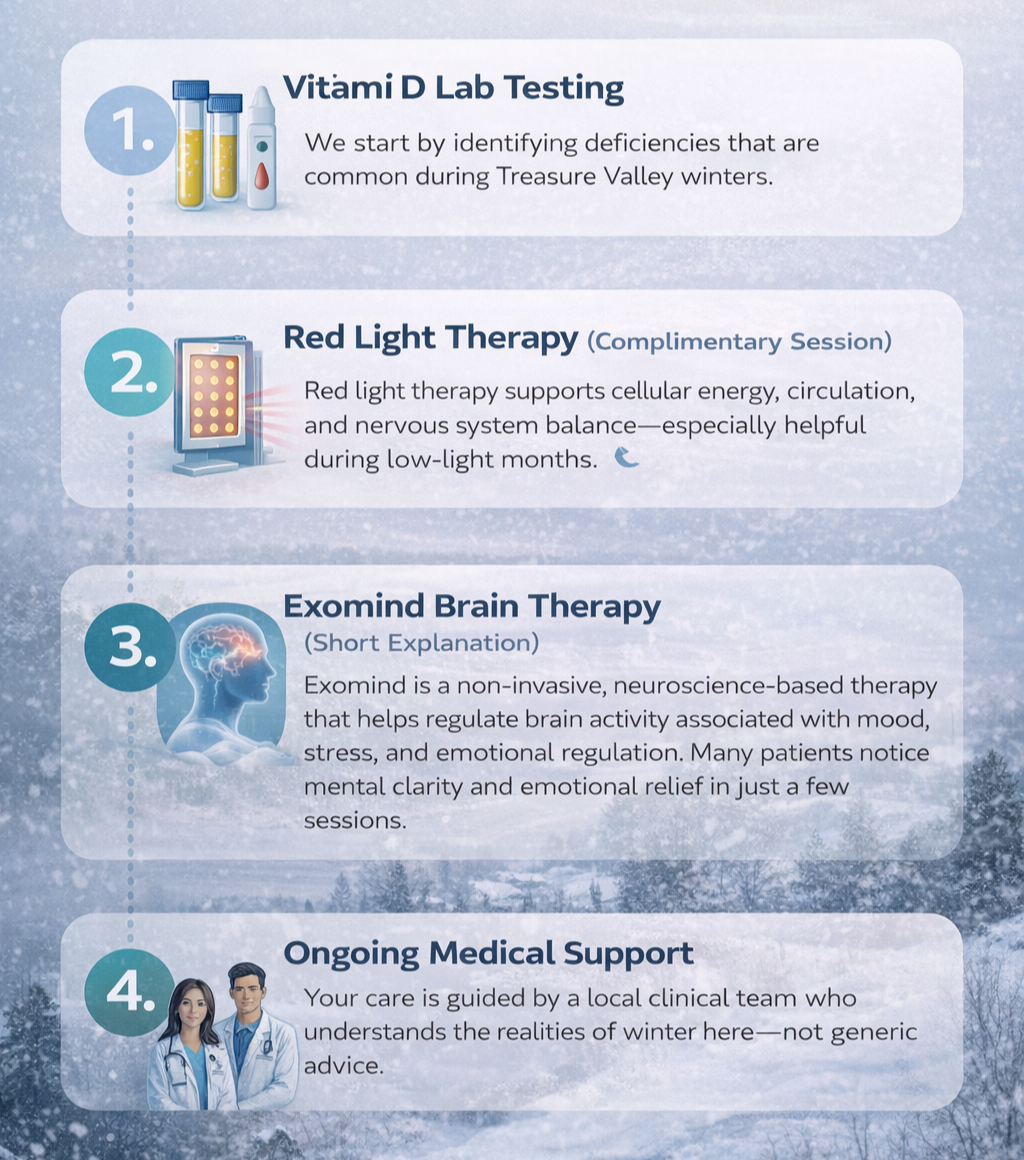
Our winter mental wellness approach is layered and intentional.
1. Vitamin D Lab Testing
We start by identifying deficiencies that are common during Treasure Valley winters.
2. Red Light Therapy (Complimentary Session)
Red light therapy supports cellular energy, circulation, and nervous system balance—especially helpful during low-light months.
3. Exomind Brain Therapy (Short Explanation)
Exomind is a non-invasive, neuroscience-based therapy that helps regulate brain activity associated with mood, stress, and emotional regulation. Many patients notice mental clarity and emotional relief in just a few sessions.
4. Ongoing Medical Support
Your care is guided by a local clinical team who understands the realities of winter here—not generic advice.
How Exomind Fits Into Seasonal Depression Care at Legacy

Seasonal depression doesn’t affect everyone the same way.
For some patients, low vitamin D and limited sunlight are the primary drivers. For others, winter triggers something deeper—persistent negative thought loops, emotional overwhelm, anxiety, or a sense of being mentally “stuck.”
This is where Exomind may play an important role.
What Is Exomind?
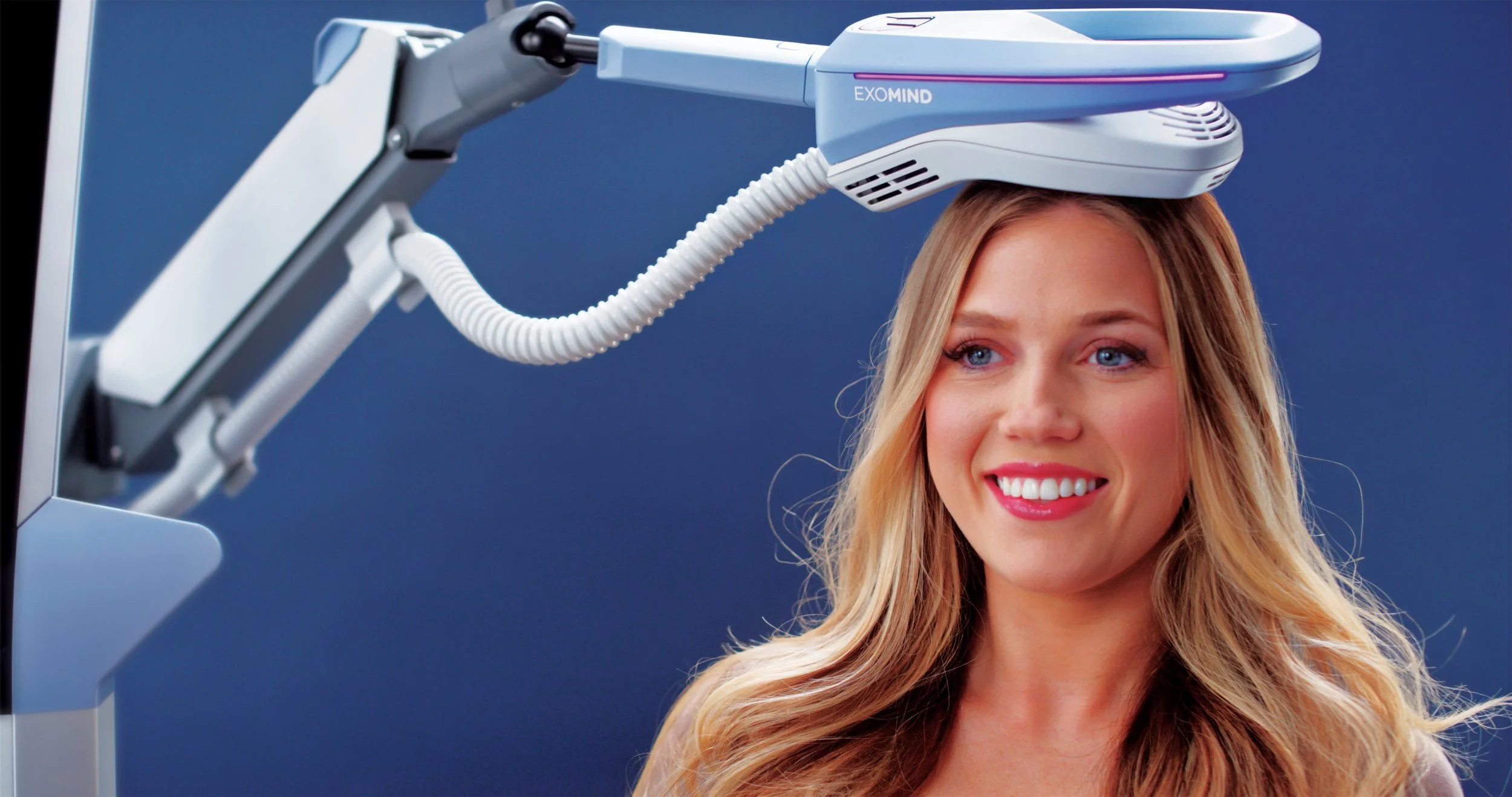
Exomind is a non-invasive, neuroscience-based brain therapy designed to support healthier brain activity patterns linked to mood, stress response, motivation, and emotional regulation.
Rather than relying on talk therapy alone or medication adjustments, Exomind works by stimulating specific areas of the brain involved in how we process stress, emotion, and repetitive thought patterns.
The goal is not sedation or numbing.
The goal is regulation and balance.
Why Winter Makes Brain Patterns Harder to Break
During Treasure Valley winters, several things happen at once:
Reduced sunlight affects circadian rhythm and neurotransmitter balance
Lower vitamin D levels impact brain health and mood stability
Stress tolerance decreases
Negative or intrusive thoughts become more repetitive
Motivation and emotional resilience decline
For some people, this results in:
Racing or looping thoughts
Increased anxiety or irritability
Emotional flatness or withdrawal
Feeling overwhelmed by simple decisions
Difficulty “snapping out of it,” even when life circumstances are stable
Exomind is designed to help interrupt these patterns at the neurological level.
Who Exomind May Be a Good Fit For
Exomind is often considered for patients who experience:
Seasonal depression that includes mental heaviness or rumination
Anxiety or stress that feels amplified during winter
Repetitive negative thoughts that don’t respond to lifestyle changes alone
Emotional exhaustion or burnout
Difficulty focusing or feeling mentally clear
A sense of being “on edge” or emotionally stuck
Many of these patients are functioning—working, parenting, socializing—but not feeling like themselves.
What Exomind Is Not
Exomind is not:
A replacement for medical care
A sedative or medication
A one-size-fits-all solution
A personality change
It is a supportive therapy, used thoughtfully and selectively, as part of a broader care plan.
That’s why not everyone who comes to Legacy will need it.
What an Exomind Session Is Like
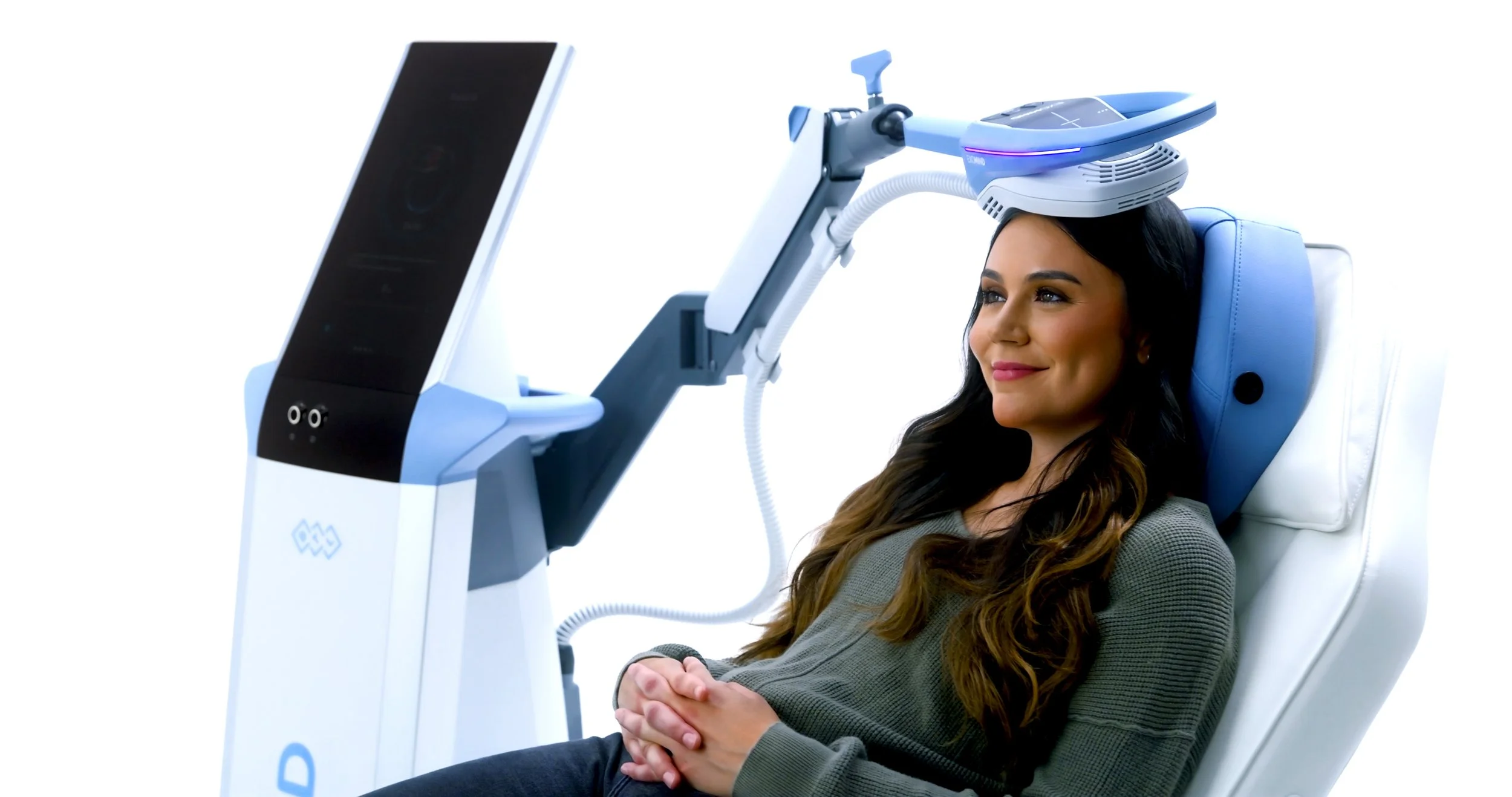
Sessions are:
Non-invasive
Comfortable and well-tolerated
Performed in a clinical setting
No downtime required
Patients often describe the experience as relaxing, grounding, or mentally quieting. Many notice changes gradually over a small number of sessions, such as:
Improved emotional steadiness
Reduced mental noise
Better stress tolerance
Clearer thinking
Why We Pair Exomind With Vitamin D and Light Therapy
Seasonal depression is rarely caused by a single factor.
At Legacy, Exomind is often most effective when combined with:
Vitamin D testing and correction, addressing biological deficiency
Red light therapy, supporting cellular and nervous system health
Clinical oversight, ensuring treatments are appropriate and adjusted as needed
This layered approach helps address both the physical and neurological contributors to winter mood changes.
Why We Pair Exomind With Vitamin D and Light Therapy
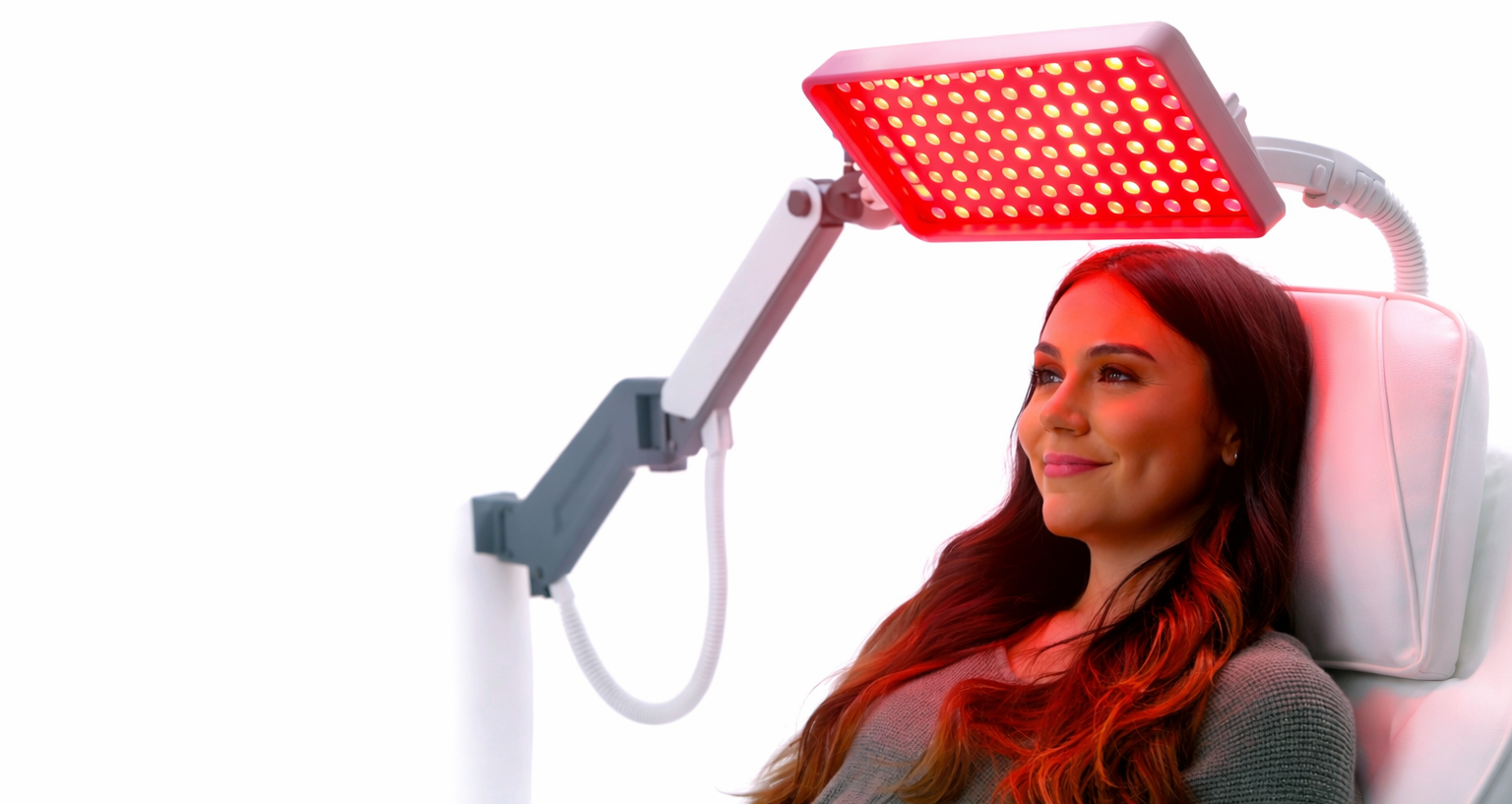
Seasonal depression is rarely caused by a single factor.
At Legacy, Exomind is often most effective when combined with:
Vitamin D testing and correction, addressing biological deficiency
Red light therapy, supporting cellular and nervous system health
Clinical oversight, ensuring treatments are appropriate and adjusted as needed
This layered approach helps address both the physical and neurological contributors to winter mood changes.
How We Decide If Exomind Is Right for You
Exomind is never assumed—it’s evaluated.
During your visit, we look at:
Your symptoms
Your lab results
Your stress patterns
Your response to winter historically
Your goals for care
If Exomind fits, we’ll explain why.
If it doesn’t, we won’t recommend it.
That’s part of responsible, patient-centered care.
The Takeaway
Seasonal depression in the Treasure Valley is real—and for some patients, it’s driven as much by brain patterns as biology.
Exomind offers a modern, evidence-based option for patients who need more than “wait for spring.”
And when it’s the right fit, it can be a meaningful step toward feeling like yourself again.
Why Results Can Happen Faster Than You Expect
Seasonal depression often responds well when:
• Deficiencies are corrected
• Brain activity is supported
• Light exposure is restored intentionally
For many patients, improvement begins within a few visits, not years.
You Don’t Have to White-Knuckle Winter
If winter has felt heavier than usual, it’s not a personal failure—and it’s not “just how it is.”
It’s a signal your body and brain may need support.
Legacy Primary Care is here to help you feel like yourself again—even when the sun won’t cooperate.
Seasonal Depression & Winter Wellness – FAQ
-
Seasonal depression, often called Seasonal Affective Disorder (SAD), is a type of depression linked to reduced sunlight exposure. In the Treasure Valley, winter inversion layers can block sunlight for weeks at a time, increasing the risk of low vitamin D levels, disrupted sleep cycles, and mood changes.
-
Seasonal depression often includes symptoms beyond typical tiredness, such as:
Persistent low mood or irritability
Loss of motivation or interest
Increased anxiety or mental fog
Changes in sleep or appetite
Feeling emotionally “flat” or overwhelmed
If these symptoms last more than a few weeks or affect daily life, it’s worth being evaluated.
-
Vitamin D plays a role in brain function, mood regulation, and energy levels. During winter, especially in areas with limited sunlight like Boise and Meridian, vitamin D levels often drop below optimal ranges. Low vitamin D has been associated with fatigue, depressed mood, and difficulty concentrating.
-
At Legacy Primary Care, we don’t guess. We perform lab testing to measure your vitamin D levels before making recommendations. This ensures supplementation is appropriate, safe, and effective for your individual needs.
-
Red light therapy uses specific wavelengths of light to support cellular energy, circulation, and nervous system balance. During darker months, it can help counteract the effects of limited natural light and support overall wellness. Legacy includes a complimentary red light therapy session as part of our seasonal support approach.
-
Exomind is a non-invasive, neuroscience-based therapy that helps regulate brain activity associated with mood, stress, and repetitive negative thought patterns. For some patients, winter triggers mental loops or emotional overwhelm that don’t improve with lifestyle changes alone. Exomind may help interrupt those patterns.
-
No. Exomind is not a universal solution. It is considered for patients whose symptoms include anxiety, rumination, emotional heaviness, or difficulty regulating stress. Legacy evaluates each patient individually to determine whether Exomind is appropriate.
-
Many patients begin to notice changes—such as improved clarity, energy, or emotional balance—within a few visits. Results vary depending on factors like vitamin D levels, symptom severity, and overall health.
-
No. Exomind is not a medication and does not replace medical care, counseling, or other treatments when those are needed. It is used as a supportive therapy within a broader, medically guided care plan.
-
Not necessarily. Seasonal depression care at Legacy is designed to be responsive and flexible. Some patients benefit from short-term seasonal support, while others may continue with components that work best for them.
-
Legacy focuses on root causes, not just symptoms. Our approach combines:
Objective lab testing
Light-based therapy
Brain-based support when appropriate
Local clinical insight into Treasure Valley winters
Care is personalized, evidence-based, and guided by medical professionals—not assumptions.
-
If winter has been affecting your mood, energy, focus, or motivation—and it’s not improving on its own—that’s a good time to schedule. Early support often leads to better, faster outcomes.
Conquer the Valley Blues This Winter
Schedule your seasonal wellness visit today and take the first step toward feeling lighter, clearer, and more energized.
Serving Boise, Eagle, Meridian, Kuna and the Treasure Valley
