
When Something Feels Off, It’s Still Healthcare

At Legacy Primary Care, we often hear patients say, “I wasn’t sure this was something I should bring up.”
They might be here for an annual physical, blood work, or a medication refill. Then, almost as an afterthought, they pause — and mention bladder leaks when exercising, discomfort that’s changed intimacy, or a feeling that their body doesn’t respond the way it used to.
These concerns are usually shared quietly.
Not because they’re minor — but because people were taught they were normal.
At Legacy, we believe something that affects your comfort, confidence, and daily life is medical care, not something to brush aside.
The Things Patients Hesitate to
Say Out Loud

A patient once told us she started mapping her errands around bathroom access.
Another said she stopped going on walks with friends along the Greenbelt — not because she didn’t want to, but because she didn’t trust her body.
Someone else shared that intimacy felt like something to avoid, not enjoy, and she didn’t know how to explain that to her partner.
None of them came in for these issues.
They came in for routine care — and almost didn’t mention what mattered most.
These are not isolated stories. They are common, and they belong in primary care.
Why Intimate Health Is Primary Care
Bladder control, pelvic comfort, and changes in sensation are often influenced by hormones, stress, muscle function, circulation, and nervous system health — all things primary care already manages.
Yet for years, patients were told:
“That’s just part of aging.”
“That’s normal after kids.”
“There’s nothing to do unless it’s severe.”
So people adapted. Quietly.
At Legacy Primary Care, we don’t separate intimate health from overall health. If it affects how you move, sleep, relate, or feel about your body, it belongs in the exam room.
Stress, Hormones, and the Body’s Signals
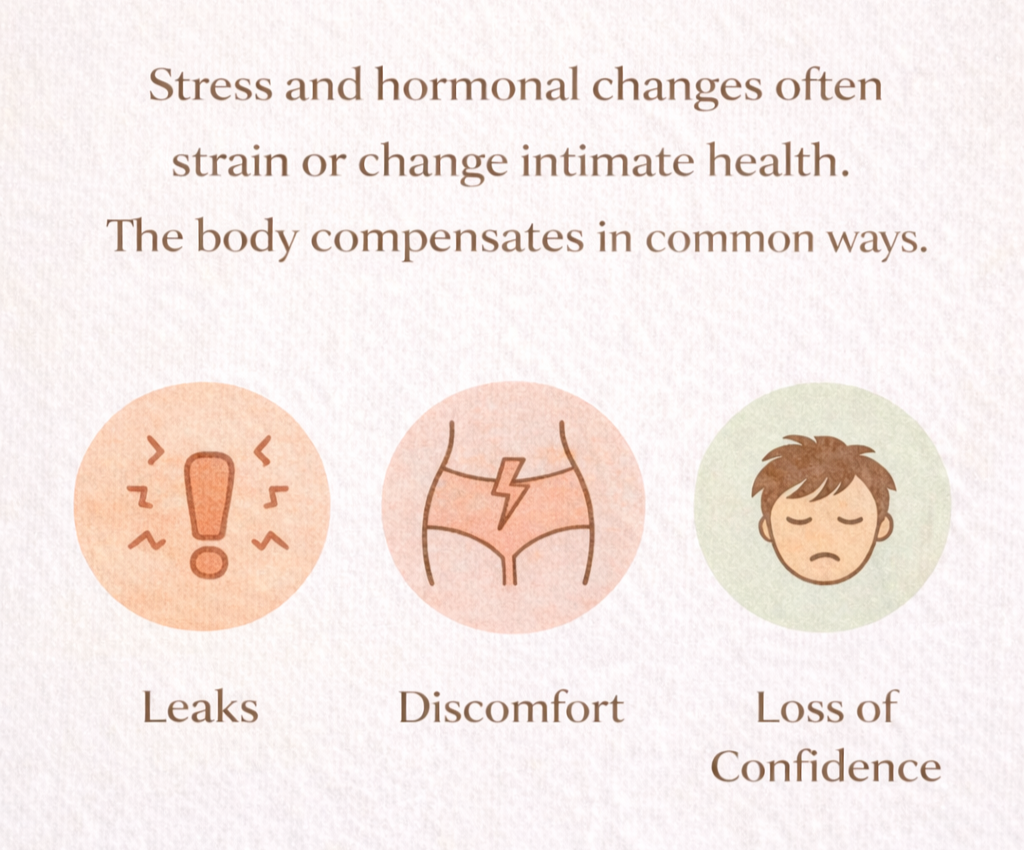
Many patients are surprised to learn how closely stress and hormones affect intimate health.
Chronic stress keeps the nervous system in a constant state of alert. Hormonal shifts during perimenopause, menopause, postpartum recovery, or andropause change tissue health, muscle tone, and circulation. Over time, the body compensates — often in uncomfortable ways.
What patients experience as:
Leaks
Discomfort
Loss of confidence
Is often the body asking for support — not silence.
Primary care is where those patterns should be recognized early.
What Care Looks Like at Legacy Primary Care

Care at Legacy is unhurried and relationship-based. There’s space to talk — and time to connect symptoms across systems instead of treating them in isolation.
Your provider may discuss:
Hormonal changes
Stress levels and sleep
Pelvic and core health
Lifestyle and movement patterns
When additional supportive therapies may help
The goal isn’t to rush into treatment — it’s to understand what’s happening and what options exist.
Who This Conversation Is For
This conversation is for:
Adults noticing changes after childbirth or aging
Patients navigating perimenopause or menopause
People experiencing stress-related physical changes
Anyone who feels like their body isn’t responding the way it once did
You don’t need the right words. You don’t need to be sure it’s “serious enough.”
If it’s affecting your life, it’s worth mentioning.
Common Questions Patients Ask
-
Yes. These concerns often connect to hormonal, metabolic, neurologic, and musculoskeletal health — all core to primary care.
-
Not here. These conversations are part of caring for the whole person.
-
Many options focus on education, prevention, and non-invasive support.
-
No referral is needed to start the conversation at Legacy Primary Care and we are accepting new patients.
Primary Care Is Where Health Conversations Begin

Most people wait — not because they don’t want help, but because they weren’t sure it was okay to ask.
At Legacy Primary Care, we want you to know:
If something feels off, it belongs here.
Healthcare isn’t just about managing disease.
It’s about helping you feel comfortable, confident, and supported in your body — at every stage of life.
Serving Meridian, Boise, and the greater Treasure Valley.
